One method, run the same way every time
Every engagement follows the same five stages. This page goes into more depth than the homepage—what each stage actually involves, what you receive, and how we work together while it's running.
Diagnosis before prescription
We don’t start with a recommendation. We start by tracing how work actually moves through your business today, because most operational problems are not mysterious—they are simply unmeasured until someone maps them.
Where a platform is genuinely part of the fix, the comparison is documented and the decision stays yours—we hold no reseller margin on any platform. Where it isn’t, we say so rather than recommending a system nobody needs. Either way, the engagement doesn’t end at a report: we stay through governance until the new way of working is the default one.
Five stages, each producing something you keep
Not every engagement uses all five—Compare & Select only applies when diagnosis turns up a real platform gap—but the order and the artefacts are the same for everyone.

Diagnose
We sit with the people doing the work and trace real transactions across order-to-cash, procure-to-pay, inventory and reporting—not how the org chart says work should move, but how it actually does. Every handoff that breaks, control that's missing, or figure entered twice gets marked and sized, so the roadmap that follows is ranked by what it will actually save.
- Gap Map
- Priority Roadmap
- KPI Baseline
Design
Every step in the target process gets a named owner, a trigger, a timeline, and a definition of done. Approval sits with whoever actually carries the risk on a decision, not necessarily the most senior person in the room, and the whole system is written down in SOPs your team can read without a training session.
- Process Blueprint
- SOP Pack
- RACI / Ownership Map
Compare & Select
Only relevant when the diagnosis turns up a real platform gap—if your current stack already fits, we say so instead of shortlisting anyway. Requirements come from your target workflows, vendors are scored against a documented comparison, and the decision is one you make, not one we make for you.
- Tool Comparison Scorecard
- Demo Scripts
- Selection Note
Deploy
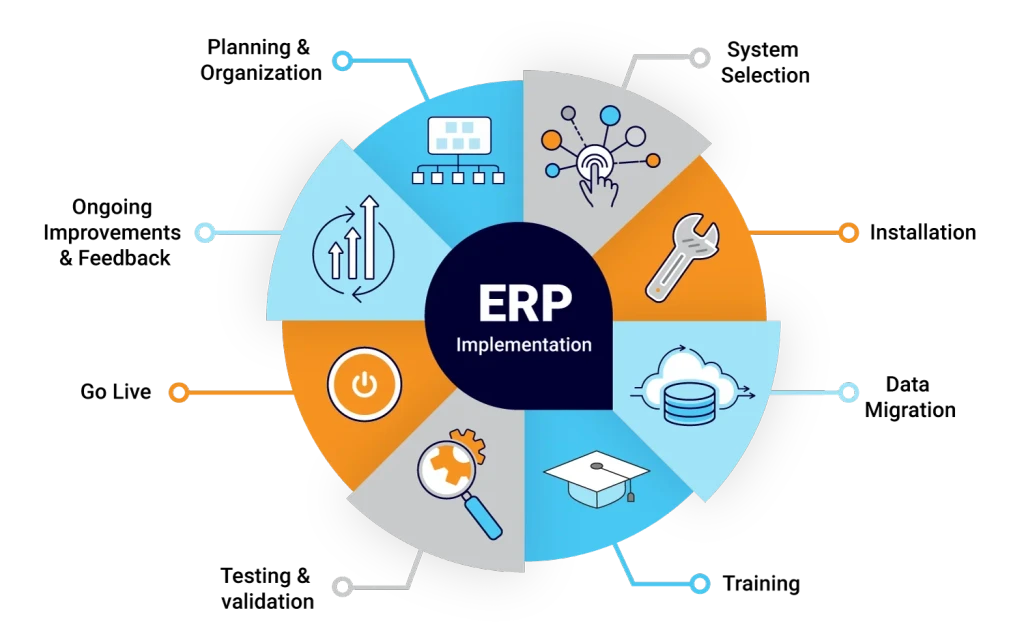
Configuration and data migration are run as an operations project rather than an IT rollout: training is role-based, not one generic session for everyone, and once live we track who is actually using the new way of working rather than assuming a go-live date settles it.
- Implementation Plan
- Go-Live Checklist
- Training Plan
Drive (Governance)
A standing monthly cycle: performance against the original baseline, the exception backlog, control testing, and the status of every open action. Items that stall get escalated with a stated reason rather than carried forward silently, and smaller fixes surfaced during daily work are queued and worked in order rather than lost in a meeting.
- Reviews
- Exception Tracker
- Improvement Backlog
What you actually receive
- An executive readout after diagnosis, narrowed to the decisions only you can make.
- Documentation your team can read on its own—SOPs, a RACI map, and process blueprints, not a slide deck that gets filed away.
- A rollout plan with adoption checkpoints, so go-live is a measured point, not a guess.
- A published governance pack every cycle, with stalled items escalated by name rather than left to drift.
How we run the engagement
Diagnosis and go-live benefit from time on the floor, so we plan on-site visits around those two stages. Design, configuration, and the ongoing review cycles run well remotely, which keeps the engagement proportionate to the problem rather than adding travel for its own sake.
Reviews follow a standing agenda rather than an open-ended call, and every review ends with named owners and dates—not another meeting to discuss the same exceptions again.